The Eight Competencies of Great Leaders

Most organizations say they want better leadership.
But when you ask what that actually means in practice, the answers get vague—fast.
That’s where the work from Egon Zehnder stands out.
They studied what differentiates effective leaders across roles, industries, and contexts—and distilled it into eight observable competencies.
Not personality traits. Not abstract ideals.
Capabilities that show up in how leaders think, act, and interact.
Here’s the model—translated into what it looks like in real work environments.
1. Results Orientation
This is about delivering outcomes—not just activity.
You see it in leaders who:
- Maintain focus on what actually moves the business
- Push through ambiguity without losing momentum
- Hold a consistent standard for execution
The difference is subtle but important:
They don’t just stay busy—they stay aligned to impact.
2. Strategic Orientation
The ability to see what’s coming—and adjust before it’s obvious.
In practice:
- Connecting short-term decisions to long-term direction
- Recognizing patterns others miss
- Making trade-offs with context, not instinct alone
This is where leadership starts to shape the future, not just respond to it.
3. Collaboration and Influence
Leadership doesn’t happen in isolation.
This shows up as:
- Gaining alignment without forcing it
- Navigating differing perspectives without slowing progress
- Building momentum across functions
Influence here isn’t authority—it’s the ability to move people with you.
4. Team Leadership
Not managing tasks—creating conditions for others to perform.
You see this when leaders:
- Set clarity around expectations
- Create space for contribution
- Address friction early, not after it compounds
This is where performance becomes shared, not centralized.
5. Organizational Development
Strong leaders don’t just work in the system—they improve it.
In action:
- Identifying capability gaps before they show up in results
- Investing in talent pipelines
- Designing roles and structures that actually work
This is leadership beyond the immediate horizon.
6. Change Leadership
Most organizations are in constant change. Few lead it well.
This competency shows up as:
- Translating change into something people can act on
- Maintaining stability while moving forward
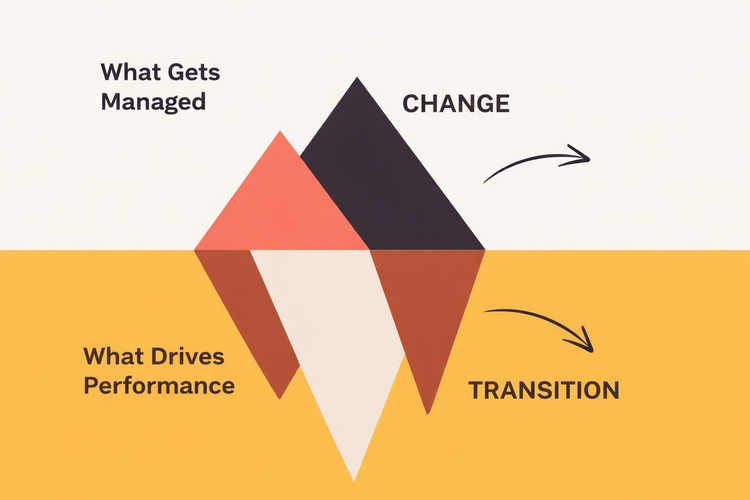
- Managing both the visible shift and the human transition underneath
Change fails when leaders only focus on the plan—not the experience.
7. Market Understanding
Leaders don’t operate in a vacuum.
You see this in those who:
- Stay close to customers and external signals
- Anticipate shifts in demand, competition, or behavior
- Ground decisions in real-world context
Without this, internal alignment doesn’t translate into external relevance.
8. Self-Awareness
This is the foundation most people skip.
In practice:
- Understanding how your behavior impacts others
- Recognizing where your strengths become limitations
- Adjusting in real time—not after feedback forces it
This is where leadership becomes sustainable.
Making Leadership Visible
The real opportunity isn’t just knowing these competencies.
It’s making them visible inside your organization.
Because once you can see them:
- You can assess where strength exists—and where it doesn’t
- You can focus development where it actually matters
- You can reduce the friction that slows execution
Before you try to improve leadership, you have to understand how it’s currently showing up.