Job Analysis Is Where Performance Actually Begins

Most organizations spend a lot of time thinking about talent, but very few spend enough time defining the work itself.
And that’s where things begin to drift.
Are positions descriptions enough?
Job analysis often gets reduced to a job description.
Position descriptions are necessary—but they fall short because they describe the role in static terms while the work itself is dynamic. Most are written as lists of responsibilities and qualifications, which creates clarity on paper but not in practice. They rarely capture how decisions actually get made, where value is truly created, or how the role operates under real conditions—ambiguity, shifting priorities, cross-functional pressure.
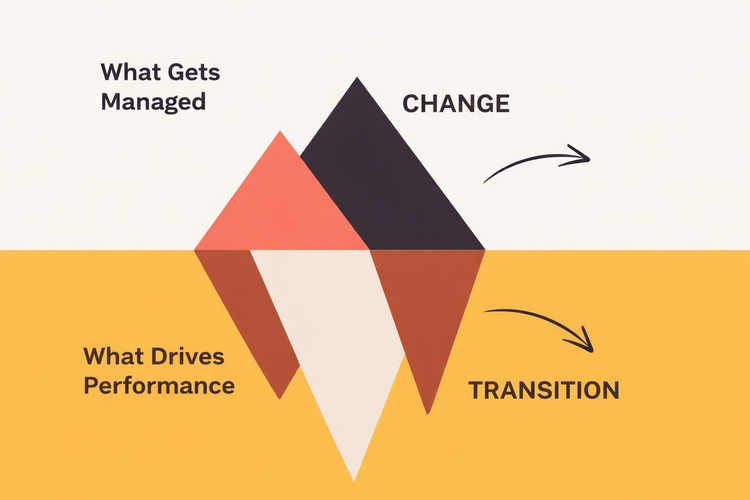
Change disrupts and transforms position descriptions
Yet most organizations don’t update them fast enough to reflect how the work is actually happening.
The document stays stable while the role evolves in real time. New expectations emerge, decision rights shift, collaboration patterns change, and the level of ambiguity increases—but none of that is captured in the formal description.
Over time, the position description becomes a snapshot of a role that no longer fully exists. And when that happens, alignment breaks down—not because people are off track, but because the definition of the work hasn’t kept pace with the conditions surrounding it.
Sales is a clear example of changing conditions
If you want to see how quickly role definitions fall behind reality, look at sales.
Not in theory—
in how buyers actually behave now.
Buyers are doing more before they ever speak to a salesperson. Research from Gartner suggests buyers spend only about 17% of their total buying time with potential suppliers—and that time gets split across multiple vendors.
By the time sales enters the conversation, a significant portion of the thinking is already done.
At the same time, the information advantage has shifted. According to Forrester, many buyers now prefer to research independently rather than engage early with sales.
And when decisions are made, they’re rarely made by one person.
Many sales roles are still designed as if:
- Access is early
- Influence is direct
- Information is controlled
- Decision paths are simple
That’s no longer the environment.
So, strong hires struggle to gain traction. Pipeline becomes inconsistent. Managers fall back on activity metrics instead which only fuels the lack of progress.
From job description → performance clarity
A more useful approach to job analysis focuses less on tasks and more on conditions for performance.
Instead of asking:
“What are the responsibilities?”
Ask:
- Where does this role create value?
- What must this person consistently do well to succeed?
- What decisions can’t be avoided in this role?
- What kind of environment does this role operate in?
- What behaviors separate average from high performance here?
This shifts job analysis from static documentation to performance definition.
If this resonates, share it with someone responsible for hiring, team performance, or role design. These are the kinds of conversations that tend to change how work actually gets done.